Beyond training
I wanted to give up on the handstand. What control taught me
Before my first 30-second handstand, there was a moment when I wanted to give up. On controlling movement and responding to a failed attempt.
There was a moment when I wanted to give up on the handstand. I didn’t want to keep coming back for more attempts. But I realised that these are exactly the moments when it is easy to abandon something we truly care about. I first had to get my reaction under control so I could return to working on my body.
Two sides of self-control
For a long time, it was easier for me to recognise control in my body: in balance, tension and deliberate movement. Over time, I saw how much also depends on my response to a failed attempt. For me, controlling my body and controlling my reactions are two sides of the same process.
Controlling your reaction is that brief moment when you recognise your anger, doubt or mounting frustration and give yourself time before acting on it. We cannot always choose what we feel in a given moment – emotions simply arise. But we can learn to choose how we respond to them. You choose what to do next, rather than letting discouragement take the reins.
The fight for the first 30 seconds
At that point, I decided I didn’t want to make a final decision based on a passing moment of doubt. I got back to work. That didn’t mean the difficulty suddenly disappeared — it meant I gave myself the chance to keep learning.
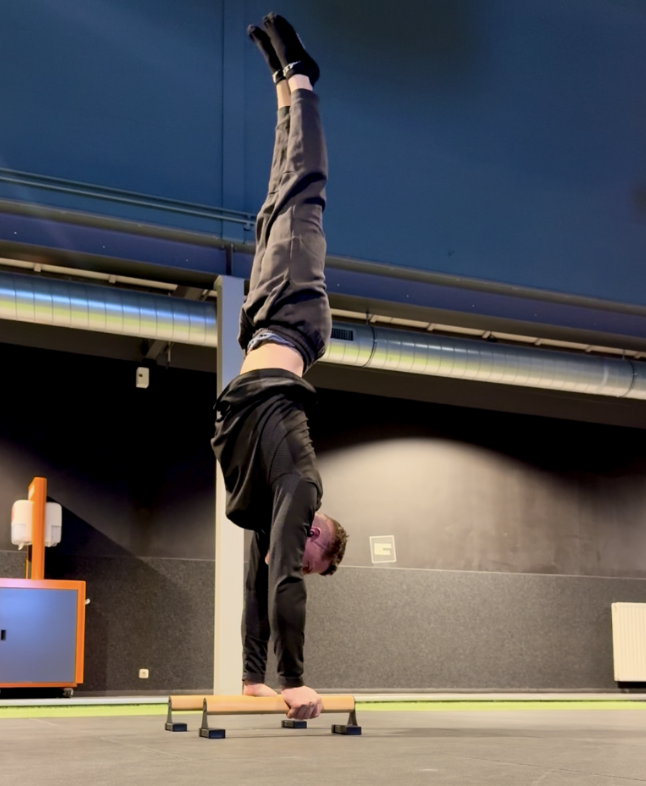
Today, as I hold a steady, confident handstand, I see more in my first 30 seconds than just a time record. That achievement means so much to me precisely because I had previously been ready to give up on it altogether. Looking at those seconds, I see that moment of doubt and the conscious decision to return to something I cared about. Mastering myself allowed me to stay on the path towards mastering the movement.
If I hadn’t gained control over my emotions, I would never have gained control over my body.
A breath that restores choice
In practice, control creates room to pause between what you feel and what you are about to do. When a failed attempt triggers the thought “there’s no point”, follow a simple process. First: pause and take a deep breath so you don’t decide the fate of your entire journey at the height of your frustration. Second: name what is happening. Tell yourself: “I’m disappointed right now because this matters a lot to me”.
That is completely different from saying “I’m not cut out for this”.
Only once you have calmed down can you choose your next step. That might mean resting, changing your approach or trying again. What matters most is that the decision is based on your goal, not on an emotion that will soon pass. True strength is the ability to get back to work despite difficult moments.
More in the “Beyond Training” series
Discipline: getting back to work, even on ordinary days
Freedom begins with the right to try
From “I believe” to “I know”: confidence built through experience
Next step
Let’s talk about your training
Tell me where you are now and what you want to achieve. Together, we’ll decide on the first step — with no obligation.